
Gifting used to be a checkbox. A tiny gift note field, a packing slip, and a hope that the recipient figured it out. That is no longer good enough.
Today, gifting can behave like a growth channel, not because it is trendy, but because you can finally run it like one: design the experience end-to-end, capture the recipient, and measure what happens next.
Channel
If you want to treat gifting as a channel, you need more than a gift note field. You need a loop that turns one order into two customer relationships.
In practice, that means:
- Make gifting obvious and easy in the buying flow.
- Deliver a branded unboxing moment that gives the recipient a next step.
- Capture recipient identity (or at least engagement) so you can follow up.
- Measure recipient-to-buyer conversion and repeat gifting over time.
If you already believe the strategy, the tactical deep dive is Gifting as a Growth Engine.
Then vs Now
Then
Gifting features were buried and manual. Notes were handwritten, inserts were static, and recipients were invisible. That meant zero attribution, zero segmentation, and no way to convert the second customer in the transaction.
Now
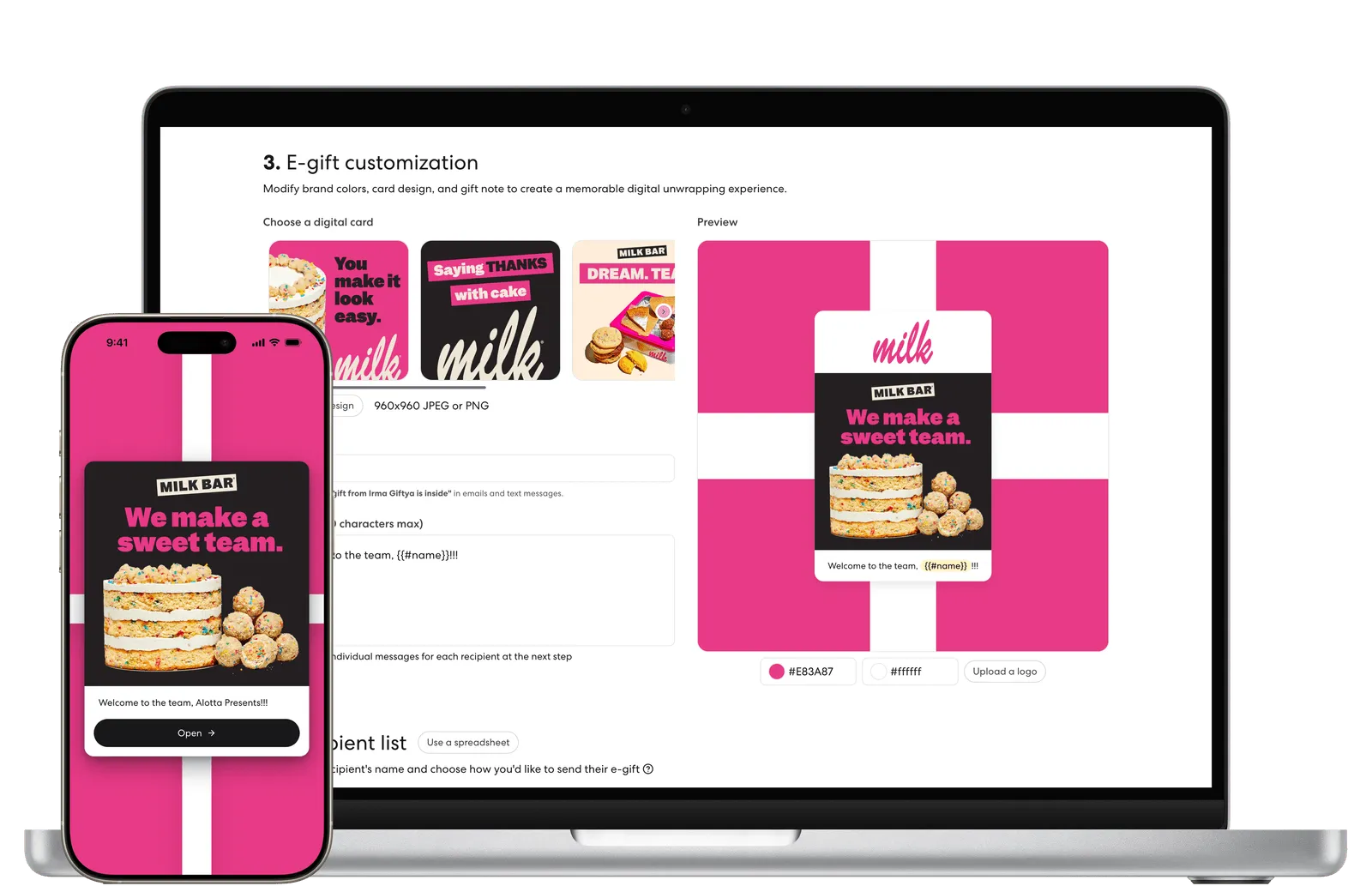
Brands can deliver a modern gifting journey across the digital and physical experience. Multi-recipient checkout, delivery scheduling, and branded unboxing remove friction and make the gift feel intentional.
The shift is not that gifting is "nice." The shift is that it can be operated, optimized, and attributed.
Why Now
Several things changed at the same time. You do not need all of them to win, but together they explain why gifting is moving from feature to channel.
Behavior
Shoppers discover gifts where they already spend time. Social commerce and mobile-first browsing have made gifting more spontaneous and more frequent. If the experience is smooth, buyers follow through.
What buyers expect now:
- A visible "Send as a gift" entry point before checkout.
- A message flow that does not feel like extra work.
- Delivery timing that matches the occasion.
Corporate
Corporate gifting demand keeps growing, and it brings larger baskets and multiple recipients in a single order. That forces brands to either modernize or miss the volume.
The operational requirement is different: uploads, approvals, multi-address shipping, and a consistent output at scale.
Infrastructure
The infrastructure finally exists. Platforms that handle gifting checkout, gift messaging, and personalized inserts make it feasible to scale the experience without breaking ops.
This is the same pattern you see when a feature becomes a channel: once the tooling exists, teams can measure, iterate, and invest.
Digital + Physical
High-performing gifting works in two connected places. If you only solve one, you leave money on the table.
Digital
The purchase experience needs to be frictionless and mobile-first. That means clear gifting CTAs, a gift message workflow that does not slow checkout, and an easy way to send to multiple recipients.
Shopify-specific patterns are covered in Shopify gift message UX.
Physical
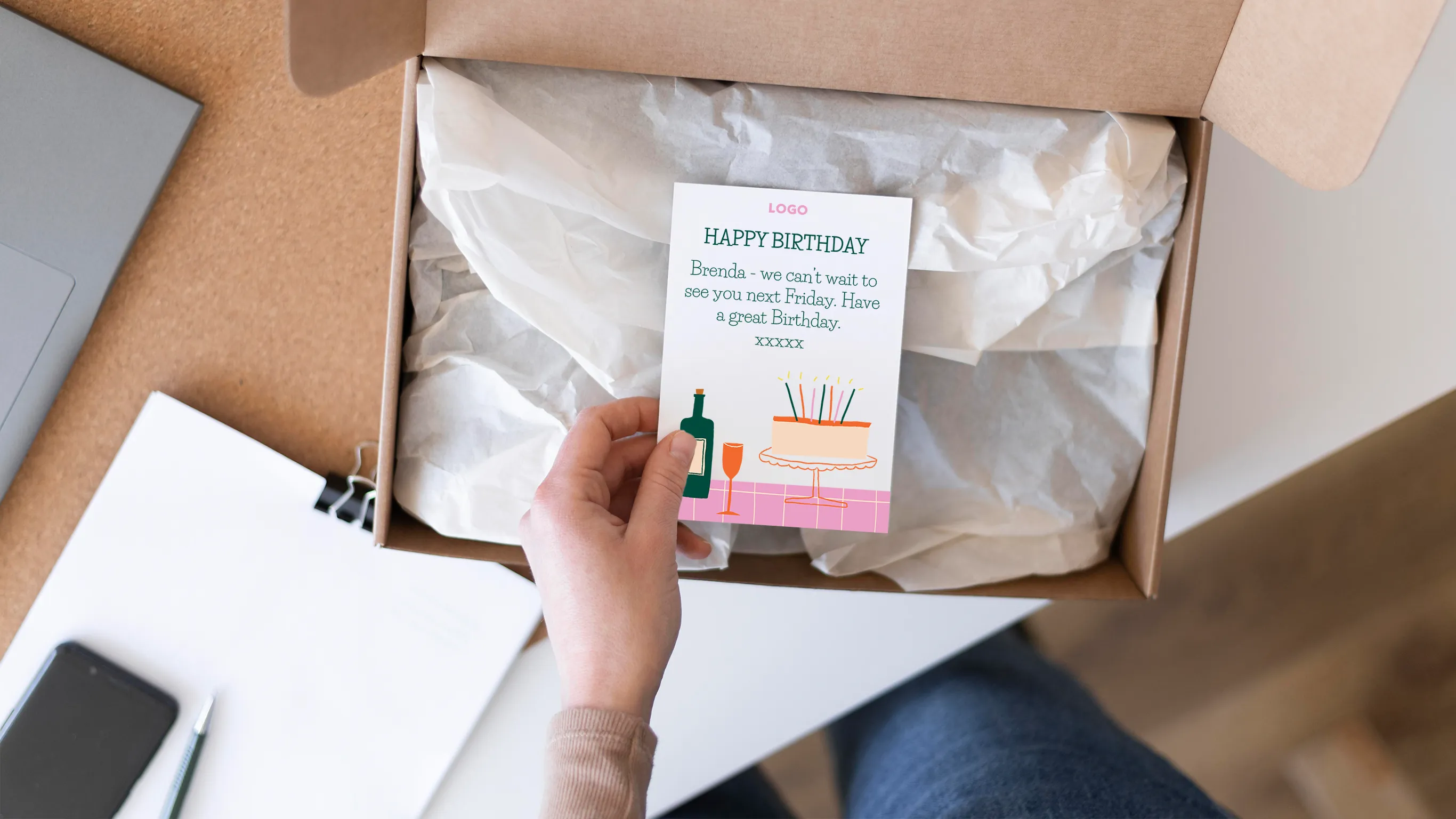
The unboxing is where the recipient forms their first impression. This is a right-time moment that cannot be replicated with ads.
A well-designed insert works when it:
- Explains what this is (and who it is from).
- Makes the brand feel intentional.
- Gives the recipient a next step (care tips, a product match, or a simple "scan to watch").
- Lets you measure engagement.
If you want a deeper dive into in-box conversion, see Right-Time Marketing.
Two Customers
Every gift creates two relationships: the buyer and the recipient. If you only nurture the buyer, you are ignoring half of the value in the transaction.
Why it compounds
Recipients arrive warm. They have a built-in recommendation from someone they trust. When you capture that attention and convert them, the loop starts to compound. This is the same dynamic that makes referral programs work, except the gift makes the introduction tangible. For related tactics, see Referral Program Success with Physical Touchpoints.
What to measure
You need visibility into recipient behavior, not just buyer conversion. That means tracking:
- Gift adoption (how many orders actually use gifting features).
- Recipient engagement (scans, video views, landing page visits).
- Recipient opt-in (email or SMS capture).
- Recipient-to-buyer conversion (the true multiplier).
The full measurement stack is covered in The Gifting Flywheel: 6 Stages and 8 KPIs.
Quick Wins
If you are early, focus on two quick wins.
- Surface gifting across the purchase path. Make it visible on PDP, cart, and checkout.
- Upgrade the unboxing. Replace generic packing slips with a branded, trackable insert that gives the recipient a next step.
Gifting already exists in your store. The shift is deciding whether it is a passive feature or a channel you can measure and improve.
Read next: The Gifting Flywheel: 6 Stages and 8 KPIs.